


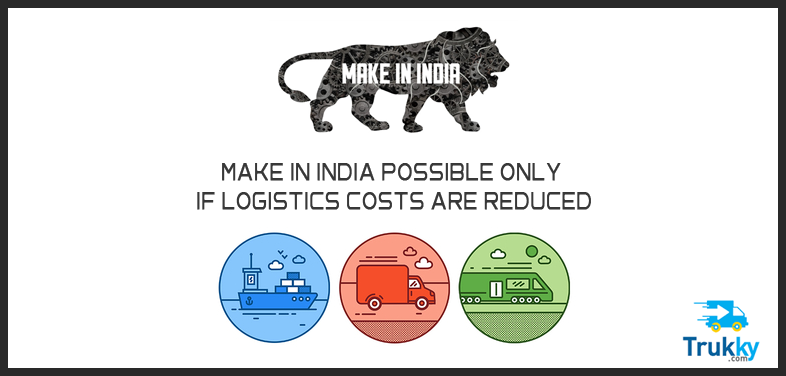
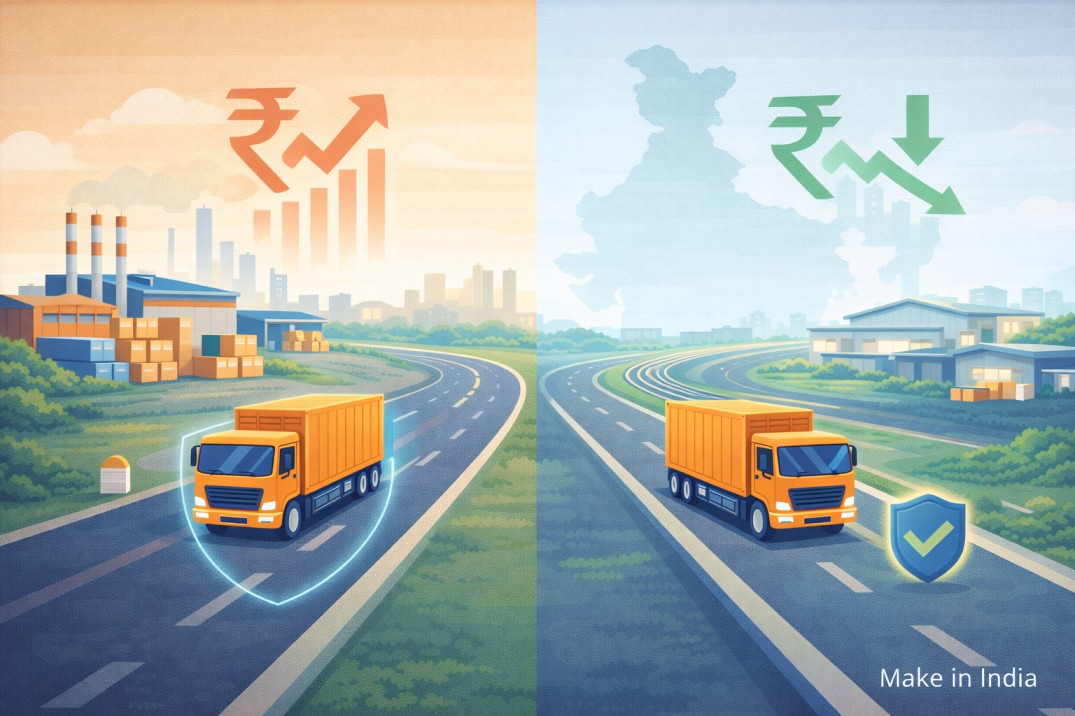
The success of Make in India depends not only on manufacturing capacity but also on how efficiently goods are transported across the country. While India has emerged as a global production hub, high logistics costs continue to reduce its competitiveness. According to government estimates and NITI Aayog discussions, logistics costs in India account for nearly 13–14% of GDP, compared to 8–9% in developed economies. Therefore, unless structural reforms reduce freight inefficiencies, the vision of Make in India becoming globally dominant will remain constrained by supply chain costs.
Why Make in India Depends on Lower Logistics Costs
Union Minister Nitin Gadkari has stated that Make in India will succeed only when logistics costs are reduced. This is because transportation directly impacts manufacturing margins and export pricing.
Key facts:
-
Road transport carries over 65% of India’s freight movement
-
India has over 6 million trucks, yet fleet fragmentation is high
-
Average truck utilization remains below optimal levels
-
Logistics cost is nearly 4–5% higher than global competitors
Therefore, reducing logistics inefficiencies is essential for strengthening Make in India.
Why Logistics Costs Are High in India
Several structural issues contribute to elevated transport expenses:
-
Fragmented truck ownership (most owners operate 1–5 trucks)
-
High empty return load percentage
-
Manual freight negotiation systems
-
Lack of route optimization
-
Limited freight consolidation
-
Delays in POD and documentation cycles
Consequently, manufacturers end up paying more for transport service than necessary.
How Businesses Can Support Make in India Through Smarter Logistics
Adopt a Digital Freight Platform
A modern digital freight platform enables structured transport planning. It offers:
-
Transport price discovery
-
System-based pricing
-
Route optimization
-
Automated documentation
-
Assured services
By eliminating manual inefficiencies, businesses reduce operational waste.
Plan Freight Conditions With Transport Partners
Manufacturers that collaborate with transport providers reduce freight volatility.
Industry studies indicate that proactive freight planning can reduce logistics costs by up to 15–20%.
Planning must include:
-
Shipment frequency
-
Delivery windows
-
Route mapping
-
Mode selection (FTL vs PTL)
Therefore, coordination improves cost predictability.
Consolidate Shipments
Freight consolidation lowers per-unit cost.
-
Switching from part-load to full truckload reduces cost by 5–10%
-
Consolidation reduces empty miles
This directly supports Make in India by improving manufacturing margins.
Use System-Based Pricing Instead of Negotiation
Traditional freight markets rely on negotiation, which creates rate volatility.
However, system-based pricing calculates freight based on:
-
Distance
-
Vehicle type
-
Demand density
-
Market trends
As a result, transparency increases and unnecessary markups decrease.
Improve Performance Tracking
Companies should measure:
-
Cost per ton-km
-
On-time delivery rate
-
POD turnaround time
-
Route-level efficiency
Data-backed performance review ensures long-term logistics cost reduction.
Government Reforms Supporting the cause
India has launched major reforms to improve logistics efficiency:
-
PM Gati Shakti Master Plan
-
Dedicated Freight Corridors (DFC)
-
National Logistics Policy
-
Unified Logistics Interface Platform (ULIP)
These initiatives aim to reduce logistics cost toward global benchmarks.
Therefore, public infrastructure reform combined with private digital adoption is critical for Make in India.
How Trukky Supports through Efficient Transport Service
Trukky strengthens manufacturing competitiveness by providing:
Digital transport price discovery
Structured system-based pricing
Assured services
Cargo insurance options
Consolidation support
Route-level visibility
By combining technology with operational processes, Trukky helps manufacturers lower freight inefficiencies and strengthen supply chain reliability.
Consequently, businesses improve profitability while supporting the broader Make in India vision.
Conclusion
For Make in India to compete globally, logistics efficiency must match manufacturing ambition. High freight costs directly reduce export competitiveness and domestic profitability.
However, through digital freight platforms, structured transport service partnerships, system-based pricing, and consolidation strategies, logistics costs can be optimized.
Therefore, reducing logistics costs is not just an operational objective. It is a national economic imperative aligned with the long-term success of Make in India.