


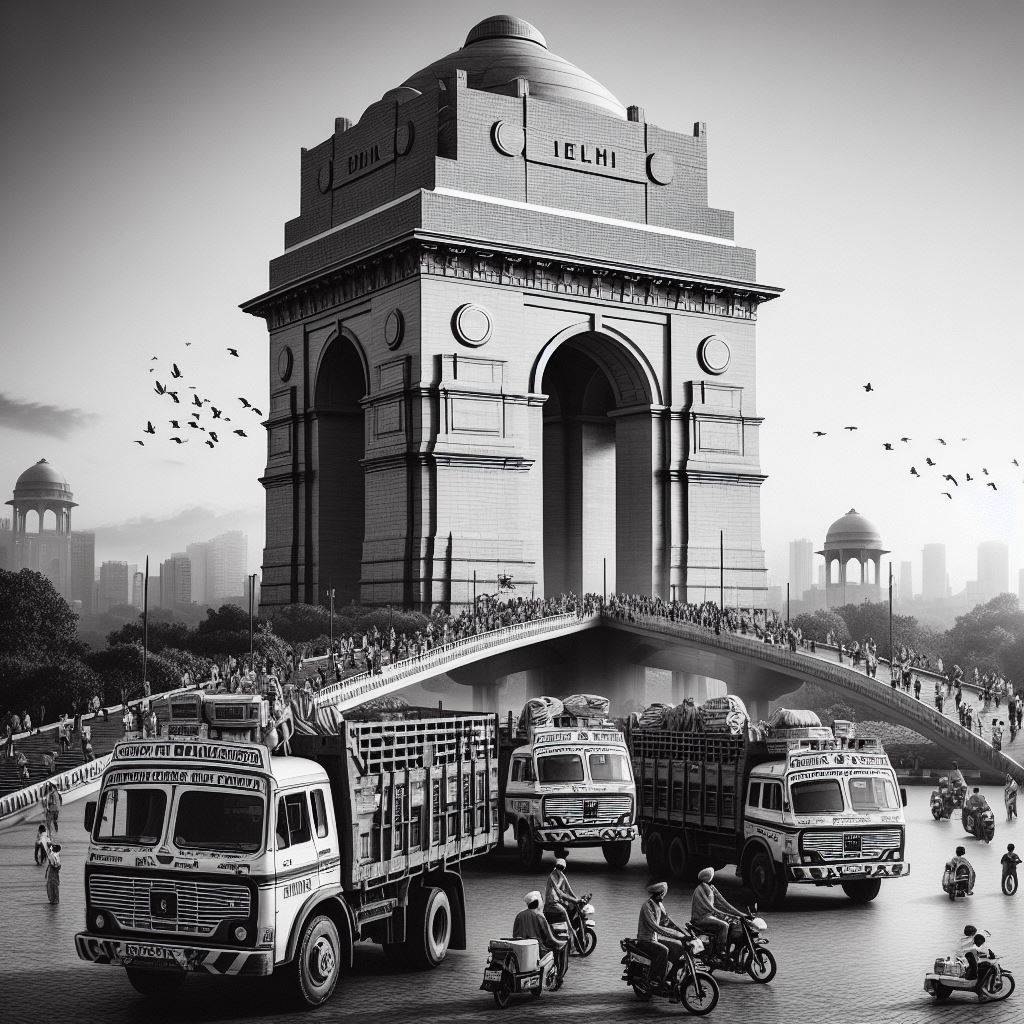
 Introduction: Why Transport Service in Delhi Is Critical for Business Growth
Transport service in Delhi forms the backbone of North India’s supply chain ecosystem. As the national capital region (NCR) contributes significantly to India’s manufacturing, retail, e-commerce, and infrastructure activity, efficient freight movement is non-negotiable. Delhi NCR handles a substantial share of road-based cargo movement in North India, supported b
y national highways like NH 44, NH 48, and the Eastern & Western Peripheral Expressways. However, traditional transport systems often suffer from delays, lack of visibility, price uncertainty, and fraud risks. This is where digital transformation is redefining Transport service in Delhi through structured platforms and real-time shipment visibility.
The Current Landscape of Transport Service in Delhi
Delhi NCR is one of India’s largest logistics consumption hubs. According to government and industry estimates:
-
Logistics contributes around 13–14% to India’s GDP.
-
Road transport carries nearly 60–65% of total freight movement.
-
NCR connects major industrial corridors including the Delhi-Mumbai Industrial Corridor (DMIC).
Given this scale, Transport service in Delhi must be efficient, transparent, and technology-enabled.
Yet, the ecosystem remains fragmented:
-
Heavy reliance on unorganized truck operators
-
Multiple intermediaries (brokers, commission agents)
-
Manual communication for tracking
-
Limited accountability
Challenges in Traditional Transport
1. Lack of Transparency
Shipment tracking often depends on phone calls or WhatsApp updates. Verified real-time shipment visibility is missing.
2. Rate Volatility
Freight pricing is often negotiated manually, leading to inconsistent and non-standardized rates.
3. Operational Delays
Without structured route planning and digital workflows, delays become frequent.
4. Fraud & Documentation Risks
Unverified operators increase exposure to financial and compliance risks.
These issues create inefficiencies for businesses relying on regular Transport service operations.
How Digital Platforms Are Transforming Transport Service
The rise of the digital freight platform model is restructuring the ecosystem.
Modern systems offer:
-
Online truck booking
-
System-based pricing
-
Real-time shipment visibility
-
Reduced dependency on middlemen
-
Structured documentation
Unlike traditional broker-driven systems, broker-free logistics platforms improve accountability and reduce communication layers.
Technology does not eliminate human involvement; it structures it.
Transport Prices in Delhi & PAN India Trends
Freight pricing plays a major role in decision-making.
Current Pricing Benchmarks:
Full Truck Load (FTL):
₹0.8 per KG to ₹10.5 per KG
Part Truck Load (PTL):
₹2 per KG to ₹16 per KG
These rates vary depending on:
-
Route distance
-
Load type
-
Seasonal demand
-
Fuel price fluctuations
On average, freight rates have seen an annual increase of 2–2.5% over the last five years, primarily due to fuel costs, toll revisions, and compliance requirements.
During peak seasons (festive periods, year-end inventory cycles), spot rates may temporarily increase due to capacity constraints.
System-based pricing models help reduce uncertainty by standardizing rate discovery.
Why Businesses Are Moving Toward Structured Transport Solutions
Businesses in Delhi are increasingly adopting:
-
Online Truck Booking
-
Digital freight management systems
-
Verified carrier networks
Key benefits include:
-
Transparent cost visibility
-
Faster dispatch cycles
-
Reduced manual follow-ups
-
Digital documentation trails
Real-time shipment visibility improves customer confidence and operational planning.
How Trukky Is Streamlining Transport Service in Delhi
Trukky operates as a digital freight platform designed to simplify Transport service in Delhi.
Through structured workflows, Trukky offers:
-
System-based pricing
-
Real-time shipment visibility
-
Verified truck partners
-
Digital booking and payment systems
-
Reduced dependency on informal broker networks
By combining technology with operational expertise, Trukky improves:
-
Delivery reliability
-
Pricing transparency
-
Dispatch efficiency
-
Risk management
This approach supports businesses across manufacturing, retail, e-commerce, and distribution sectors in NCR.
The Future of Transport Service in Delhi
With infrastructure upgrades under initiatives like:
-
Bharatmala Pariyojana
-
Dedicated Freight Corridors
Delhi’s logistics ecosystem is expected to become more structured and technology-driven.
As digitization increases, Transport service providers that integrate:
-
Digital freight platforms
-
Structured rate discovery
-
Verified network management
-
Data-backed decision-making
will lead the next phase of growth.
Frequently Asked Questions (FAQ)
1. What is the average cost of Transport service in Delhi?
FTL rates start from ₹0.8/KG and can go up to ₹10.5/KG. PTL rates range from ₹2/KG to ₹16/KG depending on route and demand.
2. Why are freight rates increasing annually?
Freight rates increase due to fuel costs, toll revisions, regulatory compliance, and seasonal demand shifts. The average annual increase is around 2–2.5%.
3. How can businesses track shipments in real time?
Digital freight platforms provide real-time shipment visibility through structured tracking systems.
4. Is online truck booking safer than traditional booking?
Yes, online truck booking platforms reduce fraud risk through verified partners and transparent pricing mechanisms.