


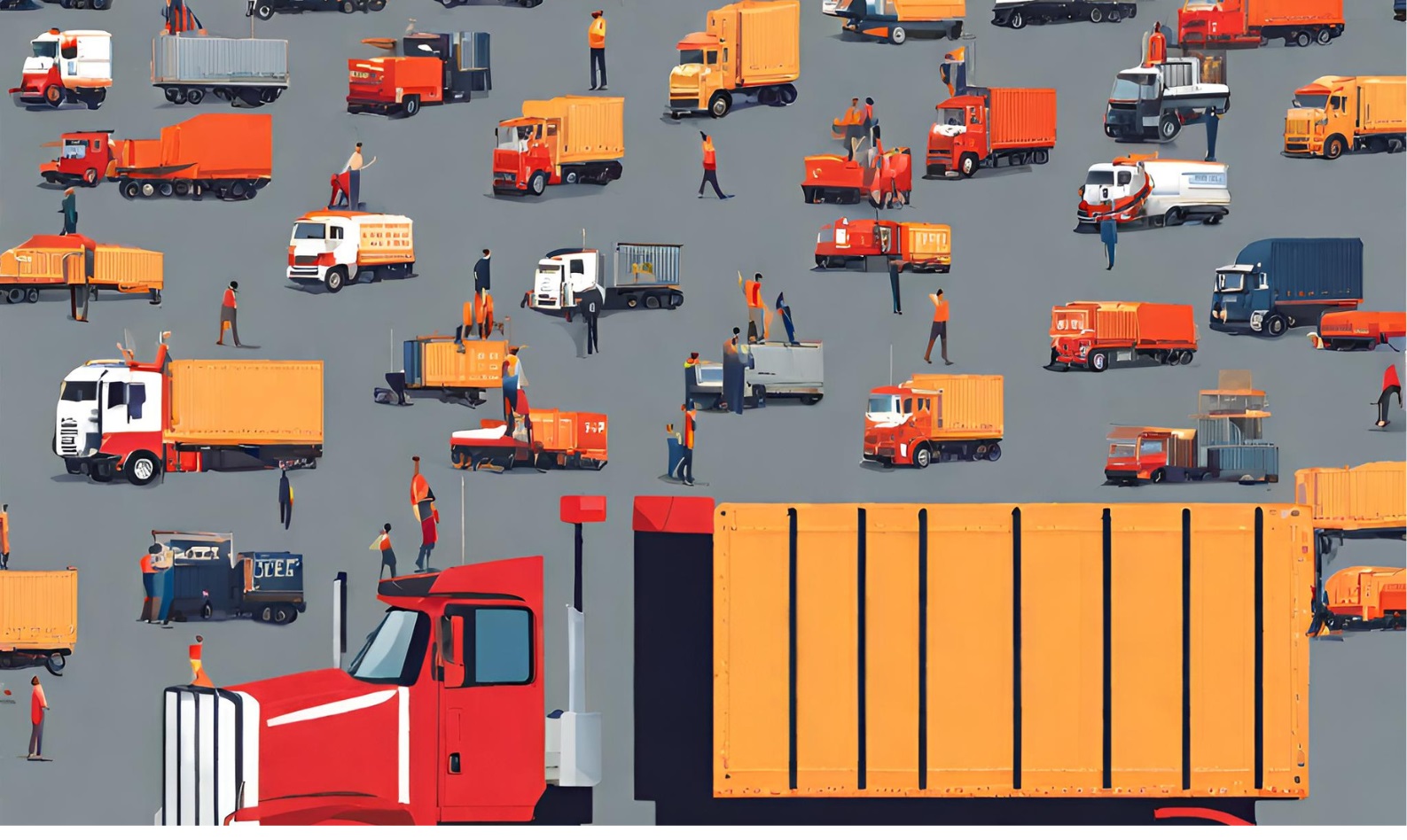
Introduction: Why the Indian Transport Industry Still Depends on People
The Indian Transport Industry is one of the largest employment generators in the country and forms the backbone of India’s economic movement. According to the Ministry of Road Transport & Highways (MoRTH), India has over 1.5 crore registered trucks and commercial vehicles, and road transport carries nearly 60–65% of freight movement in the country. Despite rapid digitization and automation, the Indian Transport Industry remains deeply human-driven. Behind every successful Transport service, there are drivers, fleet managers, warehouse staff, and coordinators who ensure that goods move safely and efficiently across thousands of kilometers.
Technology may support the system, but people power it.
Understanding the Scale of the Indian Transport Industry
To understand the human factor, it is important to understand the scale:
-
Logistics contributes approximately 13–14% of India’s GDP (Ministry of Commerce & Industry).
-
The sector employs over 22 million people directly and indirectly (Economic Survey & Invest India estimates).
-
More than 70% of fleet operators are small or unorganized players.
This structure makes the Indian Transport Industry highly fragmented and dependent on skilled manpower for coordination, compliance, and execution.
Human Expertise: The Core Strength of the Indian Transport Industry
The Indian Transport Industry is not just about vehicles. It is about people who:
-
Navigate difficult terrains and long distances
-
Manage time-sensitive deliveries
-
Handle cargo documentation and compliance
-
Ensure vehicle safety and maintenance
Truck drivers, dispatch coordinators, and warehouse handlers form the operational core. Without their expertise, no digital system can function effectively.
While automation has improved processes, decision-making, route adjustments, and crisis handling still depend heavily on trained professionals.
Why Training & Skill Development Matter
Skill development is critical in improving operational efficiency.
Government initiatives like:
-
Skill India Mission
-
PM Gati Shakti
-
Logistics Skill Council programs
have emphasized driver training, compliance awareness, and digital literacy.
Training helps in:
-
Defensive driving and safety compliance
-
Route optimization
-
Load planning and documentation accuracy
-
Understanding digital tools
As a result, Transport service providers can reduce transit delays, improve on-time delivery rates, and minimize cargo damage.
Safety & Compliance: A Human Responsibility
Safety remains one of the biggest concerns in the Indian Transport Industry.
India records one of the highest road accident rates globally (MoRTH Road Accident Reports). Therefore, structured safety training is essential.
Well-trained drivers help:
-
Reduce accident risks
-
Maintain vehicle standards
-
Follow regulatory compliance
-
Protect cargo and minimize insurance claims
Even with advanced monitoring systems, safety protocols are implemented by people on the ground.
Technology Supports, But People Execute
Digital transformation is reshaping logistics. However, technology works best when combined with skilled manpower.
Modern systems include:
-
A digital freight platform for booking and coordination
-
Real-time shipment visibility to track cargo movement
-
System-based pricing to ensure transparent cost discovery
-
Reduced dependency on informal networks through structured workflows
Yet, these systems require trained professionals to operate efficiently.
Technology reduces uncertainty.
Human expertise ensures reliability.
The Shift Toward Structured & Broker-Free Logistics
Traditionally, the Indian Transport Industry operated through multiple intermediaries, including brokers and commission agents.
However, structured and broker-free logistics models are now gaining ground. These models improve:
-
Transparency
-
Pricing clarity
-
Communication efficiency
-
Operational accountability
When technology integrates with trained professionals, Transport service delivery becomes predictable and scalable.
How Trukky Empowers the Human Side of Logistics
At Trukky, technology and manpower are combined strategically.
Through a digital freight platform, Trukky enables:
-
Real-time shipment visibility
-
Structured dispatch workflows
-
Transparent system-based pricing
-
Verified partner network
More importantly, Trukky invests in empowering Transport professionals by:
-
Enhancing digital adoption
-
Standardizing operational processes
-
Supporting compliance and documentation
-
Creating financial stability for fleet operators
The goal is not to replace the human factor but to strengthen it.
Why the Human Factor Will Remain Irreplaceable
As AI, automation, and analytics evolve, some aspects of logistics may become automated. However:
-
Crisis management
-
Relationship management
-
On-ground decision-making
-
Safety accountability
will always require human judgment.
The Indian Transport Industry will continue to evolve, but its strength will always lie in skilled professionals who operate the ecosystem.
Conclusion: Building a Smarter, Human-Centric Transport Ecosystem
The Indian Transport Industry is not just an economic engine. It is a people-driven network that keeps commerce moving across the country.
While digital platforms improve efficiency and transparency, human expertise ensures execution, compliance, and trust.
The future of Transport service lies in combining:
-
Structured digital platforms
-
Transparent pricing systems
-
Real-time shipment visibility
Technology builds efficiency.
People build reliability.
And together, they keep India moving.