


Introduction
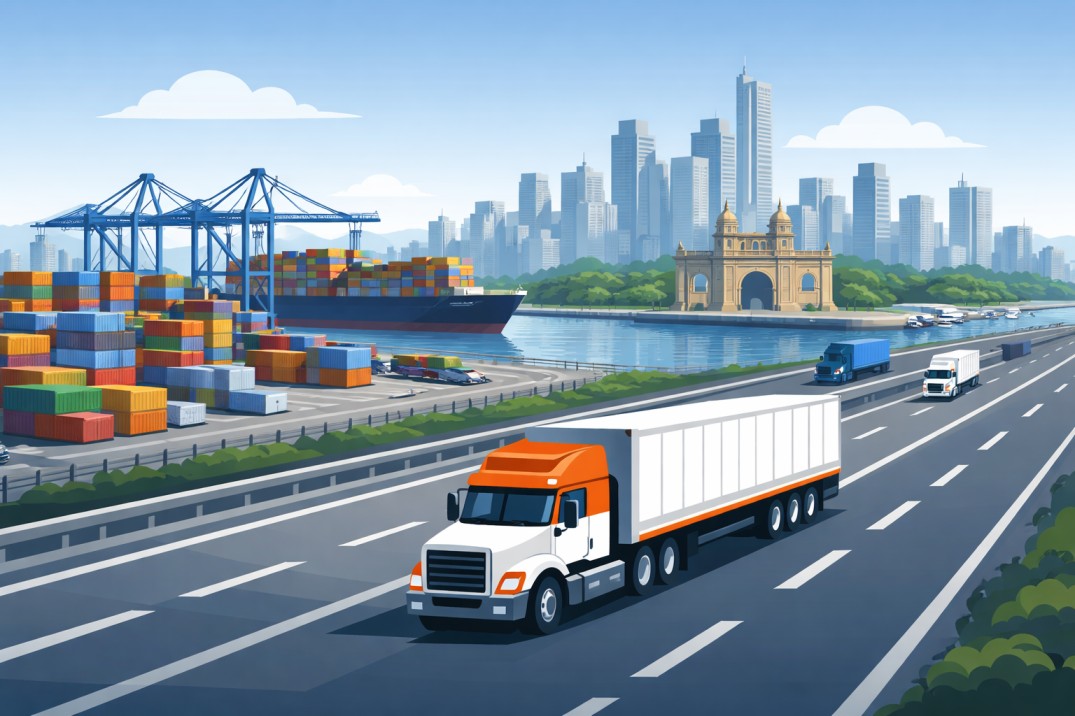
Mumbai is India’s financial capital and the country’s most critical logistics gateway. With major ports, dense consumption markets, and strong industrial connectivity, Transport Service in Mumbai plays a central role in national supply chains. The city handles massive freight volumes daily, connecting imports, exports, and domestic distribution.
From FMCG and pharmaceuticals to chemicals and e-commerce, freight demand remains consistently high. In this blog, we decode Mumbai’s logistics ecosystem, including market size, industrial clusters, truck demand, freight routes, and pricing trends shaping transport service in Mumbai.
Mumbai Logistics Market Overview
Mumbai is the backbone of India’s import-export logistics and distribution network.
Key Logistics Insights
| Metric | Estimate |
|---|---|
| Logistics Market Size | ₹25,000 – ₹30,000 Crore annually |
| Annual Freight Volume | 65–70 Million Tons |
| Daily Truck Movement | 45,000 – 60,000 trucks |
| Key Corridors | NH-48, NH-160, NH-61 |
| Strategic Connectivity | Delhi, Gujarat, South India, Ports |
Mumbai houses India’s busiest port ecosystem including JNPT (Nhava Sheva), which handles over 50% of container traffic in India.
According to logistics and trade reports, Mumbai contributes significantly to India’s overall freight movement, making transport service in Mumbai one of the most in-demand logistics services in the country.
Major Industrial Clusters Driving Freight Demand in Mumbai
Mumbai’s freight demand is driven by a mix of industrial, commercial, and warehousing hubs.
Bhiwandi Warehousing Hub
India’s largest warehousing cluster supporting e-commerce, FMCG, and retail distribution.
Taloja Industrial Area
Major hub for chemicals, pharmaceuticals, and manufacturing units.
Navi Mumbai Industrial Belt
Supports container freight, export-import logistics, and industrial cargo.
Andheri & MIDC Areas
Home to SMEs, electronics, and light manufacturing units.
Nhava Sheva Port Region
Critical for containerized cargo movement and export-import shipments.
These clusters create continuous demand for transporter in Mumbai and large-scale logistics services.
Top 10 Commodities Transported from Mumbai
Data Source: Trukky Booking Data 2025–2026
| Commodity | Industry Context |
|---|---|
| FMCG Goods | High-volume retail distribution |
| Pharmaceuticals | Bulk drugs and formulations |
| Chemicals | Industrial and specialty chemicals |
| Electronics | Consumer electronics shipments |
| Textile & Apparel | Export and domestic distribution |
| Automobile Parts | Auto supply chain logistics |
| E-commerce Parcels | Rapid last-mile distribution |
| Machinery | Industrial equipment |
| Food Products | Packaged and processed food |
| Import-Export Containers | Port-driven cargo movement |
These commodities ensure constant demand for transport service near me in Mumbai.
Top 3 Truck Types in Demand
Data Source: Trukky Booking Data 2025–2026
32 Feet Multi Axle Truck
Capacity: 18–25 Tons
Used for long-haul freight and bulk cargo movement across India.
20 Feet Container Truck
Capacity: 6–10 Tons
Essential for port-based logistics and container shipments.
14 Feet / 17 Feet Trucks
Capacity: 3–7 Tons
Used for city distribution and regional logistics.
These trucks dominate online truck booking in Mumbai due to high freight density and diverse cargo needs.
Major Transport Routes from Mumbai
Data Source: Trukky Booking Data 2025–2026
Distance: ~1400 km
Transit Time: 3–4 days
Critical for north India distribution.
Distance: ~980 km
Transit Time: 2–3 days
Supports industrial and tech supply chains.
Distance: ~710 km
Transit Time: 1–2 days
Important for pharma and electronics.
Distance: ~530 km
Transit Time: 1–2 days
High-frequency industrial route.
These routes are essential for businesses searching transporter near me in Mumbai.
Seasonal Freight Demand Trends
Mumbai’s logistics operates like a constantly moving engine but still follows patterns.
High Demand
October to March
Festive season and financial year demand surge.
Moderate Demand
April to June
Stable industrial and retail movement.
Low Demand
Monsoon (July–September)
Delays due to weather and port congestion.
Rate Surge
Festivals, year-end, and export cycles.
Return Load Imbalance
Northbound routes often see imbalance due to higher inbound cargo.
These trends impact transport service in Mumbai pricing and planning.
Freight Rate Insights in Mumbai
Intrastate Rates
₹0.75/kg to ₹1.1/kg
Interstate Rates
₹1.4/kg to ₹10/kg
Freight rates in Mumbai are generally on the premium side.
Why Rates Fluctuate
High Demand Pressure
Constant cargo flow increases truck demand.
Port Dependency
Export-import cycles impact pricing.
Distance Economics
Long routes optimize cost per kg.
Truck Availability
Peak congestion leads to higher rates.
Businesses must plan strategically when using transport service in Mumbai.
Key Logistics Challenges Faced by Shippers in Mumbai
Despite being a logistics powerhouse, Mumbai has its challenges.
Broker-Driven Market
Heavy dependence on intermediaries.
Pricing Volatility
Freight rates vary widely.
Traffic Congestion
Urban delays impact delivery timelines.
Limited Visibility
Tracking issues with traditional systems.
Operational Delays
Port congestion and city restrictions.
These challenges push businesses toward modern logistics services in Mumbai.
Transport Service in Mumbai – Trukky’s Transformation
Trukky is transforming logistics through a digital freight platform designed for efficiency and transparency.
Key Advantages
• System-based pricing for accurate cost estimation
• Broker-free logistics eliminating middle layers
• Real-time shipment visibility for full control
• Assured services with verified transporters
• In-house partner network ensuring reliability
With Trukky, businesses can access seamless online truck booking and dependable transport service in Mumbai.
Conclusion
Key Takeaways
Mumbai is India’s most critical logistics hub with unmatched freight movement.
Its port ecosystem and warehousing infrastructure drive massive cargo demand.
However, traditional logistics challenges still impact efficiency.
Digital platforms are reshaping how businesses access transport.
As India moves toward a tech-driven logistics ecosystem, platforms like Trukky will play a defining role in making transport service in Mumbai faster, more transparent, and scalable. convert daw project converter faq everything you need to know online
FAQs – Transport Service in Mumbai
What is the average transport cost in Mumbai?
Intrastate rates range from ₹1/kg to ₹2.2/kg, while interstate rates range from ₹2.4/kg to ₹10/kg.
Which trucks are commonly used in Mumbai?
32 ft multi axle trucks, 20 ft container trucks, and 14–17 ft trucks are widely used.
How to book trucks online in Mumbai?
You can use digital platforms like Trukky for fast and reliable online truck booking.
What affects freight rates in Mumbai?
Rates depend on demand, port activity, distance, truck availability, and seasonal trends.