



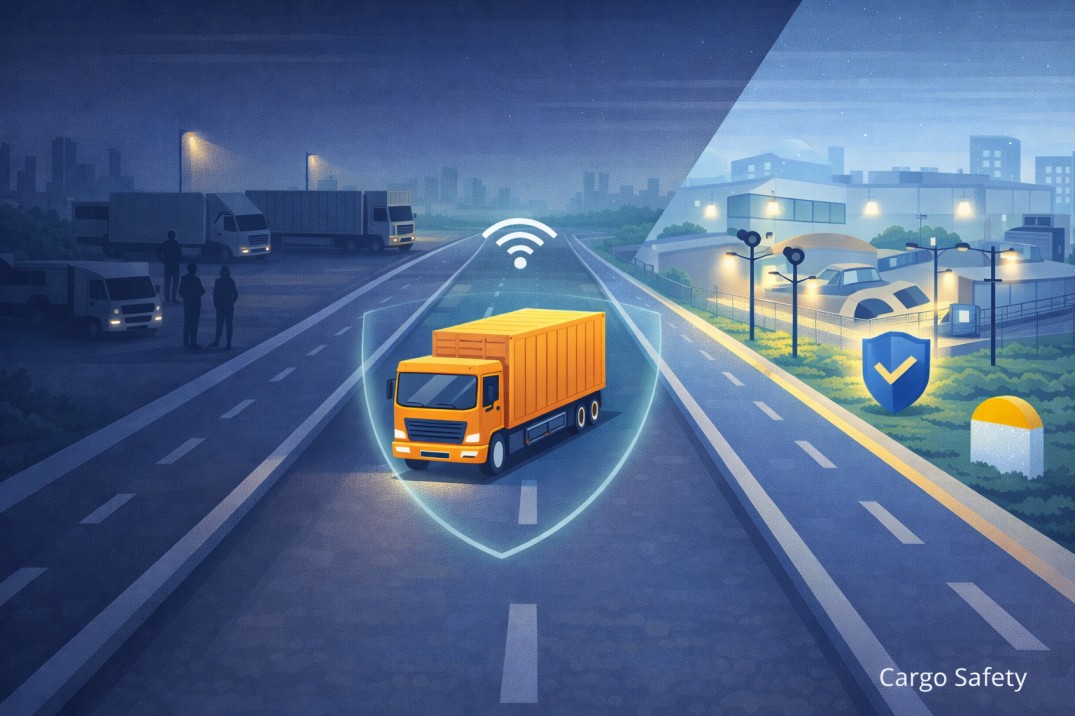
Safety of Your Cargo During Transport has become a critical concern for shippers, logistics companies, and businesses across India and globally. With increasing freight movement and rising cargo value, theft and in-transit risks continue to challenge the transport service industry. According to global supply chain security reports, cargo theft leads to billions of dollars in annual losses worldwide. In India as well, unsecured parking, information leakage, and unstructured transport operations contribute to preventable losses. Therefore, adopting structured processes, secure parking practices, and technology-backed tracking systems is no longer optional. Instead, it is essential for ensuring safe and reliable cargo delivery.
Why Cargo Safety During Transport Is a Growing Concern
Cargo theft is not limited to a specific geography. According to global freight security reports:
-
Cargo theft incidents worldwide cause losses exceeding $5 billion annually
-
Most thefts occur when trucks are parked unattended
-
High-value goods such as electronics, metals, and FMCG are primary targets
-
The first 200 miles of transit are considered the most vulnerable zone
In India, increasing road freight volume has amplified the risk exposure. Since road transport accounts for nearly 65% of freight movement, preventive measures must be strengthened.
Where Is Cargo Most Vulnerable?
Freight is most vulnerable during:
-
Night parking in unsecured lots
-
Public roadside halts
-
Extended stoppages in low-surveillance areas
-
Information leaks about shipment destination
Therefore, structured transport service planning significantly reduces risk.
Proven Measures to Improve Safety of Your Cargo During Transport
Below are practical, research-backed safety measures.
Maintain Confidentiality About Shipment Details
The cargo’s destination and value should not be widely disclosed. Information leaks often enable theft planning. Therefore, communication must be controlled and structured.
Use High-Security Locks and Seals
Electronic locks, ISO-certified seals, and tamper-evident mechanisms increase protection. Mechanical barrier seals are widely recommended for long-haul shipments.
Minimize Stops and Avoid Predictable Patterns
Frequent stoppages increase exposure. Therefore, route planning should prioritize minimal halts and secured fuel stations.
Choose Secure Parking Facilities
Studies show that most cargo theft incidents occur during parking. Hence:
-
Park in well-lit areas
-
Prefer CCTV-monitored facilities
-
Avoid abandoned or dimly lit spaces
Structured transport service providers often partner with verified parking networks.
Implement Real-Time Tracking Technology
Technology significantly strengthens Safety of Your Cargo During Transport.
A modern digital freight platform enables:
-
GPS-based tracking
-
Geo-fencing alerts
-
Automated notifications
-
Real-time shipment visibility
Geo-fencing creates virtual route boundaries. If deviation occurs, alerts are triggered immediately.
Stay Alert During the “Red Zone” (First 200 Miles)
Security studies indicate that most thefts happen within the first four hours of movement. Therefore, unnecessary stops must be avoided during this phase.
Park Tail-to-Tail When Possible
Strategic parking blocks cargo door access and reduces tampering risk. Facing walls or loading docks also adds protection.
Watch for Suspicious Activity
Sometimes thieves intentionally trigger tracking alarms to create confusion. Therefore, alerts must always be verified.
Maintain Continuous Communication
Clear communication between driver and operations team enhances monitoring. Modern systems supported by real-time shipment visibility reduce reliance on manual follow-ups.
Invest in Driver Training
Trained drivers recognize red flags early. Hence, companies that invest in safety training reduce cargo theft incidents significantly.
How Technology and Structured Logistics Reduce Cargo Risk
Traditional, fragmented booking systems increase vulnerability. However, structured models improve accountability.
A tech-enabled, broker-free logistics ecosystem offers:
-
Verified transport partners
-
Standardized documentation
-
Route-based monitoring
-
Centralized shipment control
Furthermore, system-based pricing ensures structured freight allocation rather than last-minute unverified bookings.
Consequently, operational risk is reduced.
The Role of Transport Service Providers in Cargo Security
Professional transport service providers integrate:
-
Verified truck networks
-
Secure route planning
-
Digital documentation
-
Real-time monitoring
Therefore, businesses should prfioritize structured transport service partnerships instead of informal arrangements.
How Trukky Strengthens Cargo Safety During Transport
Trukky enhances cargo protection through:
✔ Technology-backed monitoring
✔ Real-time shipment visibility
✔ Verified partner ecosystem
✔ Structured documentation processes
✔ Secure parking collaborations
By combining operational discipline with a digital freight platform, risk exposure is minimized while delivery reliability is improved.
Conclusion
Safety of your cargo During Transport is not merely a precaution. It is a strategic requirement in modern logistics. With increasing freight value and complex supply chains, unstructured transport systems create unnecessary risk.
However, by combining secure parking practices, advanced tracking technology, driver training, and digital monitoring systems, cargo protection can be significantly strengthened.
Therefore, businesses must transition toward structured, technology-driven transport service models to safeguard goods, reduce losses, and improve operational confidence.