


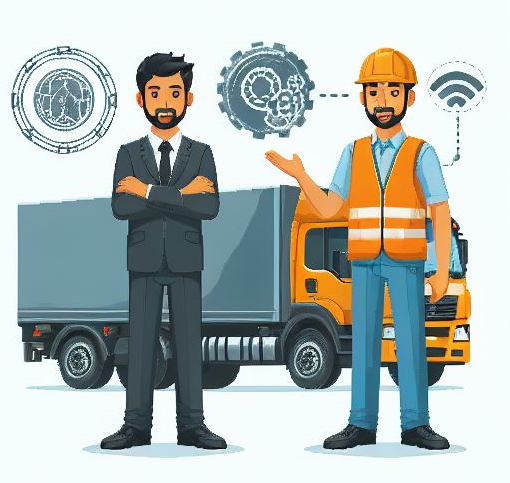
Introduction: Why Revolutionizing the Logistics Industry Starts with People
Revolutionizing the Logistics Industry is not just about trucks, warehouses, or software. It begins with people. India’s logistics sector contributes nearly 13–14% to the national GDP and employs over 22 million people directly and indirectly (Invest India & Economic Survey estimates). Despite its scale, the industry remains highly fragmented, with more than 70% of fleet operators categorized as small or unorganized players. This structure often results in underpayment, operational inefficiencies, and limited growth opportunities for logistics professionals. Therefore, revolutionizing the logistics industry must focus on empowering professionals through structured systems, technology, and transparent transport service models.
The Reality of India’s Logistics Workforce
The Indian logistics ecosystem is manpower-intensive. It includes:
-
Truck drivers
-
Transport coordinators
-
Warehouse staff
-
Dispatch executives
However, the challenges are significant:
-
Income volatility due to demand fluctuations
-
Dependence on brokers and informal networks
-
Limited access to digital tools
-
Manual freight negotiations
When professionals lack financial stability, efficiency suffers. Moreover, inconsistent pricing and informal systems reduce trust within the transport service chain.
Why Fragmentation Slows Growth
India’s logistics costs are estimated at 13–14% of GDP, compared to 8–10% in developed economies. One of the key reasons is fragmentation and limited digitization.
Traditional systems rely heavily on:
-
Manual freight negotiation
-
Broker-driven coordination
-
Limited shipment tracking
-
Verbal documentation
As a result:
-
Operational transparency decreases
-
Payment disputes increase
-
Fraud risks rise
-
Growth opportunities shrink
Revolutionizing the logistics industry requires structured processes rather than informal networks.
Revolutionizing the Logistics Industry Through Structured Platforms
The transformation begins when technology integrates with manpower.
Modern digital freight platforms enable:
-
System-based pricing
-
Broker-free logistics workflows
-
Real-time shipment visibility
-
Structured digital documentation
Instead of multiple intermediaries, professionals operate within a standardized, technology-enabled ecosystem. This reduces uncertainty and improves income predictability.
Technology does not replace professionals. It strengthens them.
The Role of SaaS & Digital Infrastructure
Software-as-a-Service (SaaS) models are reshaping the logistics ecosystem.
Through structured digital systems, logistics professionals can:
-
Manage dispatches efficiently
-
Access real-time shipment visibility
-
Track freight rates transparently
-
Expand customer networks
When pricing becomes system-based rather than negotiation-driven, professionals benefit from fairness and stability.
This shift is central to revolutionizing the logistics industry sustainably.
How the Trukky Associate Model Empowers Professionals
The Trukky Associate Partner Program is designed to empower transport professionals by providing:
-
Access to a digital freight platform
-
Structured booking systems
-
Transparent rate discovery
-
Verified network integration
-
Reduced reliance on informal brokers
By combining technology with operational discipline, logistics professionals can:
-
Increase income predictability
-
Reduce dependency on commission agents
-
Improve customer trust
-
Enhance service reliability
The goal is not only operational efficiency but financial independence and professional growth.
Financial Stability & Ethical Growth
Income volatility often pushes professionals toward short-term survival decisions. However, structured ecosystems promote:
-
Predictable earnings
-
Transparent transactions
-
Reduced fraud risks
-
Professional accountability
When professionals operate within broker-free logistics models supported by digital platforms, ethical growth becomes achievable.
This is how revolutionizing the logistics industry extends beyond technology and into culture.
The Bigger Impact on the Transport Service Ecosystem
Empowered professionals improve the entire transport service ecosystem:
-
Delivery reliability increases
-
Customer trust strengthens
-
Operational efficiency improves
-
Compliance standards rise
Under initiatives such as PM Gati Shakti and the National Logistics Policy, India aims to reduce logistics costs and improve global competitiveness. However, these macro goals depend on micro-level empowerment of logistics professionals.
Revolutionizing the logistics industry begins at the individual level.
Conclusion: People + Technology = Sustainable Growth
Revolutionizing the logistics industry is not only about digital transformation. It is about empowering the people who operate the system daily.
By integrating:
-
Digital freight platforms
-
System-based pricing
-
Real-time shipment visibility
-
Broker-free logistics models
professionals gain control, stability, and scalability.
When professionals thrive, the entire logistics ecosystem strengthens.
And that is true transformation.
Frequently Asked Questions (FAQ)
1. What does revolutionizing the logistics industry mean?
It refers to transforming traditional freight operations through digital platforms, transparent pricing, and structured workflows.
2. How does a digital freight platform help logistics professionals?
It provides real-time shipment visibility, system-based pricing, and access to verified transport networks.
3. Why is broker-free logistics important?
It reduces dependency on informal intermediaries, improves transparency, and increases income predictability.
4. Can technology improve earnings for transport professionals?
Yes. Structured pricing and digital booking systems reduce negotiation uncertainty and improve operational efficiency.